Pinkerton's Bestiary: Werewolves

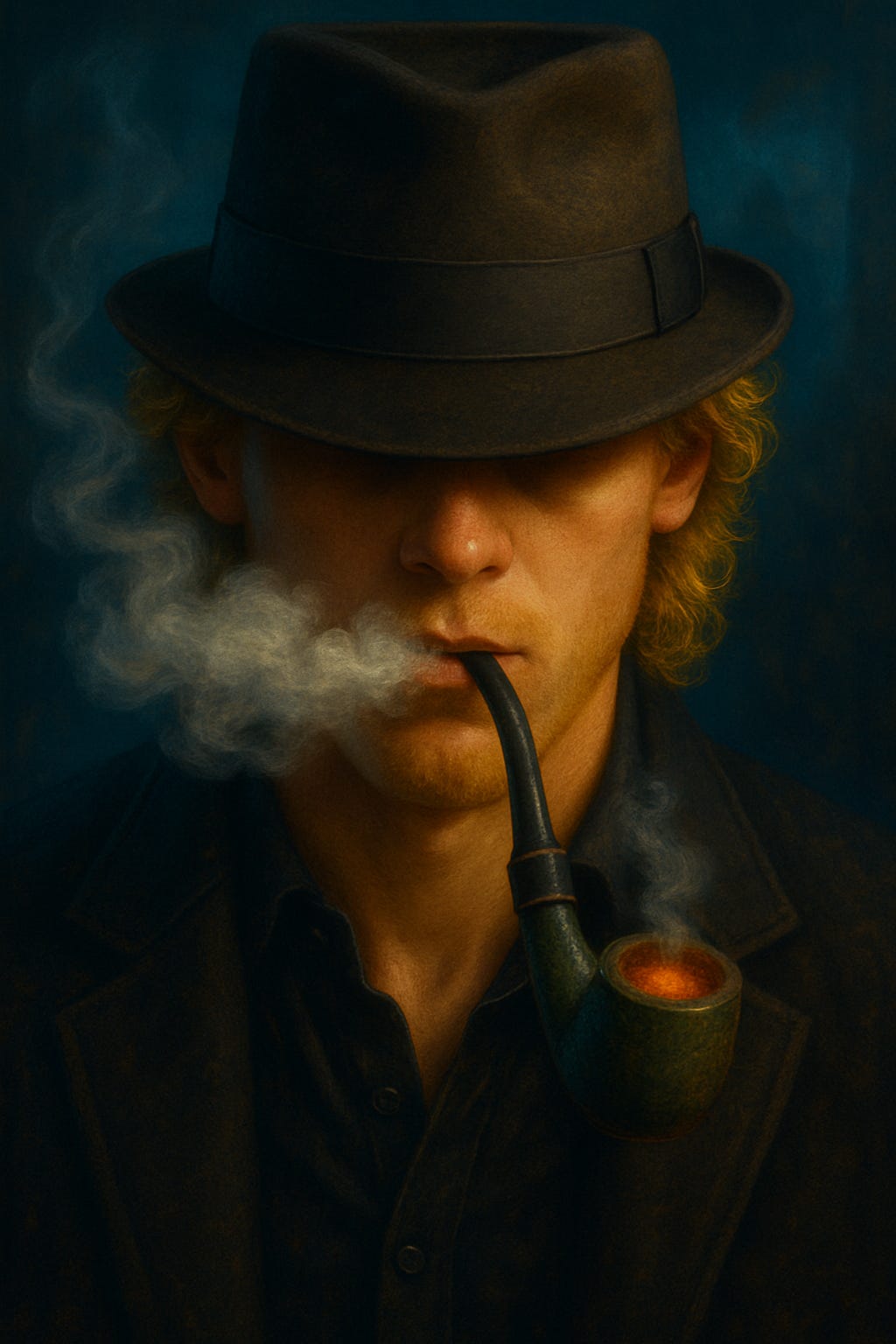
Werewolves are by far the most common shapeshifting variant. No one knows why, but there’s something about a wolf that people find appealing. The werewolves are one of the main reasons that people subscribe to the Antediluvian Ritual Theory. In the previous log, I mentioned that some men and women in our line of work claim that shapeshifters are proof that all monsters come from rituals recovered after the great flood. To extrapolate on that point, the werewolves are cited as proof for the theory because every first-generation werewolf is created by a ritual. Now, the same can be said for vampires. As discussed, the first phase of vampiric development begins with a ritual; however, the werewolf ritual is more direct. Rather than a red-eyed phantom floating around a cemetery, a werewolf ritual turns the human in question into a fully formed werewolf. There are no intermediate phases, just a jump to a final form. The werewolf will gradually increase its strength and speed with time, but these improvements are modest compared to the vampire, and it basically begins with its final form.
That being said, there are various types of werewolves, and with each type, a corresponding ritual, cursed object, or potion. You have the basic wolf. This is essentially a wolf, no more, no less. Some people believe that there is a species of human that can transform into a wolf by natural means—without a ritual, cursed object, or potion—but I would disagree with this assertion. I believe these people to be from a line of second-generation werewolves, but more on that later. The second type is a dire wolf, basically a really big wolf. The third is a humanoid wolf, a wolf that walks upright but is approximately the same size as a human. The fourth is a large humanoid wolf; these werewolves are usually lanky and stand around eight or nine feet tall. The fifth is a dwarf wolf; unlike the name suggests, the wolf is still the same size as a man, but its muscular capacity is disproportionate. And the last is a hulk-wolf—my name, not the Order’s. This wolf stands around eight feet tall and upward with a gigantic muscular frame. As counterintuitive as it might seem, the sizes of these wolves are not correlated to stages of development, but are the result of distinct rituals, cursed objects, or potions.
The only way to really gauge the power level of a werewolf is by the means of their origins, and, as with all things regarding shapeshifting, the situation is tricky.
The first-generation werewolf is defined as the initial werewolf who was created by magical means. The second-generation werewolf is defined as a werewolf bitten by the first generation. There is no third generation because the end result of a bite from a second generation is the same as a bite from the first generation. However, the differences between a first-generation and a second-generation are extreme. A first-generation werewolf is not dependent on the moon for its transformation. The ritual is what causes the change, and the wolf either remains in its monstrous state, losing all its sentience, or can control its transformation at will, retaining its sentience. In the same vein, a first-generation werewolf’s ability to transform will be triggered by a potion or cursed object, and the situation regarding their sentience can vary. It’s hard to tell since they can’t always talk, but some do, and it’s unpleasant. Since the first-generation can control their transformations, they are often considered an extremely high-ranking werewolf, despite their particular size and strength. When it comes to werewolves, sentience is the criterion for their ranking, with the exception of potions, but I’ll get to that in a minute.
Now, a second-generation werewolf will invariably be dependent on the moon for its transformation, but they can all, in time, learn to control the transformation at will. Most don’t, of course, but they can if they are found and given enough time. The particular difficulty in learning to control the transformation will vary depending on the species’ ritual of origin. But here is where things get interesting. While vampiric babies are rare, werewolves can have children, and if two werewolves have a child, that child will become a werewolf, usually around puberty, but not always, and if the two werewolves in question have learned to control their transformation, the child will be able to control the transformation the moment the curse manifests. Now, usually, the child is aware of his parents’ situation long before the curse takes effect, but it’s hypothetically possible for a child to go his or her entire life with the ability to transform and not even know it. There are no examples of this, of course, but I see no reason why such a situation couldn’t take place. It may very well have.
This is where I believe the races of humans who can become wolves come from. I imagine that the first couple of that race learned to control their forms and carried that control to future generations. The thing you must understand about werewolves is that most of them, pardon the pun, run in packs. They often roam the woods in small nomadic groups. The risk of being discovered in urban areas eventually became too great—the process of learning control takes a great deal of time—so many of them eventually chose isolation. They might send a child to college if they’ve learned adequate control—I did have such a case—but this is rare, and often the child finds the transition to urban life too difficult and will return to his or her pack.
Before addressing how to handle werewolves on the field, I need to mention potions. Shapeshifting potions are effective for their purpose, but the transition of the curse is particularly weak in such situations. Unlike cursed objects, potions are broken down by the body, and the potion’s potency can vary a great deal. For this reason, it’s very difficult to classify the strength of a first-generation werewolf because the measure of their sentience can vary depending on how long the potion has been in the body. And the curse works the same way. For lack of a better analogy, the magic from the curse, more or less, spills out of the werewolf, and how much of that curse carries through to the victim will depend on how long the potion has been in the body. (Note: When it comes to the matter of werewolf rankings. I wouldn’t spend a great deal of time studying them because they are largely arbitrary. As I said before, the criterion is the werewolf’s measure of control, but from my point of view, the situation is dichotomous. Either they can control the curse or they can’t. Partial control—that is to say, lapsing in and out of awareness—won’t cut it in the field. So, I don’t bother with the distinctions. Plus, the whole problem with the werewolf rankings is that if the werewolf is utilizing ritualistic means, then the fact they can control their sentience is immaterial. They are utilizing the demonic, with the exception of extraordinarily rare cases when a wizard might utilize his own internal power—but why would they since there are far better ways to obtain speed and strength—or perhaps in a situation when a vampire or some other creature with magic independent of the demonic makes a cursed object or potion. This almost never happens. So, a first-generation werewolf who can control his or her sentience doesn’t change our job. When it comes to second-generation werewolves, the ability to control their transformation warrants a higher ranking, but it doesn’t tell us anything about their advanced speed and strength since the control of the transformation might be the result of a weaker form of the curse. Therefore, I have little use for the Order’s ranking system on this subject.)
I recently had a very complex case where a young woman was bitten by a shifter—who was using the werewolf as one of many forms—and she learned to control her transformation inside of a year, which is record time. However, she simultaneously shared all the speed and strength of her maker. This werewolf was of the hulk variety, and she’d taken on his strength and speed, which were comparable to any werewolf of that species, so far as I can tell. (I wasn’t present for the case. I merely consulted.) The reason for this rapid control was because the curse’s grip was very weak, so she must’ve been attacked towards the end of the potion’s effective period. I say this simply as a word of caution. Potion-oriented transformations can be unpredictable and have unforeseen effects on both the victim and the individual utilizing such a method.
Now, when it comes to the question of how to fight werewolves. Number One: Christian methods will work on first-generation wolves but not on the second-generation. The reason for this is because the nature of the curse changes during the transfer. It becomes more grounded in natural energies, hence its dependence on the moon. Here is where things become very tricky. Silver will work on the second-generation, but not the first. This is what gets many hunters killed. They misjudge the correct means to dispatch the werewolf; furthermore, those who are unfamiliar with the distinction will kill the second-generation werewolf, then fail to kill the first-generation because the thing about werewolves is that there is almost never one of them. When there is a werewolf in an urban area—remember the long-term, more experienced, and powerful wolves are moving in packs deep in the forests—the cause is almost always a witch doctor or cultist who’s turned via occult methods, and in the case of the werewolf, the means for this transformation are almost always demonic. There are a few who might use their own energy, but this is rare because there are far safer ways to utilize shifting, and none of them are rooted in the fairy realm. This is something that makes lycanthropy distinct from other forms of shifting. In fact, satanists often use werewolves as guards, and these men are all subject to Christian methods. You can remove the curse by utilizing them. The process is much like an exorcism. Remember, God is doing all the work, not you, so the particulars don’t really matter.
I want you to think back to all the horror movies you’ve seen about werewolves. The movie usually ends with the tragic beast’s demise, but, in reality, the work is never done when that poor soul is dispatched. It’s imperative that you find the initial cause. The locals who adopt such a mob mentality almost always end up having trouble later because they never spot the initial culprit, and very often that job falls to us because someone else has failed. Understand that instances of werewolf attacks are loud, brutal, and brief. Second-generation werewolves are much like zombie vampires in that respect, but the plague persists because people stop after the first wolf is killed. I cannot think of a time when there wasn’t a puppet master tormenting the town during the werewolf cases I’ve worked. Second-generation werewolves are usually mere muscle. They can serve few other functions. They lack sentience, after all. Someone has to be controlling that muscle.
Much like with shifters, the key to finding the first-generation wolf is much like finding the witch doctor or cultist in his or her human form. And just like the mad scientist scenario I mentioned in a previous log, the key is looking for the loathsome individual lurking around the various crime scenes. This is where our job becomes ethically complicated. We don’t want to wait for the second-generation wolf to kill again. We don’t trade lives. At the same time, we often use the crime scenes to find the first culprit. My advice is to never make the trade-off and to try and find the initial culprit by any other means possible, but should the werewolf kill someone while you are working the case, it should be your priority to get to the crime scene as fast as possible and find the skunk lurking about. Utilize the Christian means we’ve discussed to remove the threat. Command the curse to be gone in Christ’s name, then arrest the madman, or kill the creature if a cop isn’t handy.
Now, when it comes to destroying the second-generation wolf. First of all, I should begin by saying that I take great pity on these poor souls. I treat their murders as something more akin to manslaughter. They’ve usually lost their sentience and have no control or memory of the crime. I tend to find them and send them to the Order, where they can be isolated and taught to control the curse. Werewolves, believe it or not, can make great agents, so long as they are not fighting elder vampires. But if you are put in a situation where you must destroy the beast lest you be killed yourself, silver is imperative. The reason for silver working on the second generation and not the first is the same as the reason for the transformation’s dependence on the moon. The first-generation’s power is rooted in the demonic, but in the case of the second-generation, they didn’t choose to take on the curse, so it shifts from something demonic to something rooted in the elemental. Therefore, the curse requires an elemental force, silver in this case, to stop it. And I can’t stress this enough. A werewolf’s healing factor is practically infinite. It even surpasses the vampire. A vampire can be shot in the head or heart, but it doesn’t matter where you hit a werewolf or if you blow the beast up. It will heal, and it will heal before the night is out so the human can return to his or her home oblivious to the entire encounter. The bullet must be silver, and if you wish to kill the beast, the wound must be substantial enough to kill a man. This is a hard rule. But I would advise you to take a more investigatory approach when dealing with werewolves. The second-generation wolf has no idea what’s going on. They’ll be suspicious, but they will not have encountered anything certain enough to convince them that they are the culprit. And why would they believe such a thing? Who wants to admit they’ve killed a man without realizing it? And in my experience, once the wolf is aware of his or her situation, they try very hard to fight it. That’s worth something.