
Pinkerton's Bestiary: Vampires: An Introduction
An Explanation of the Various Vampire Species

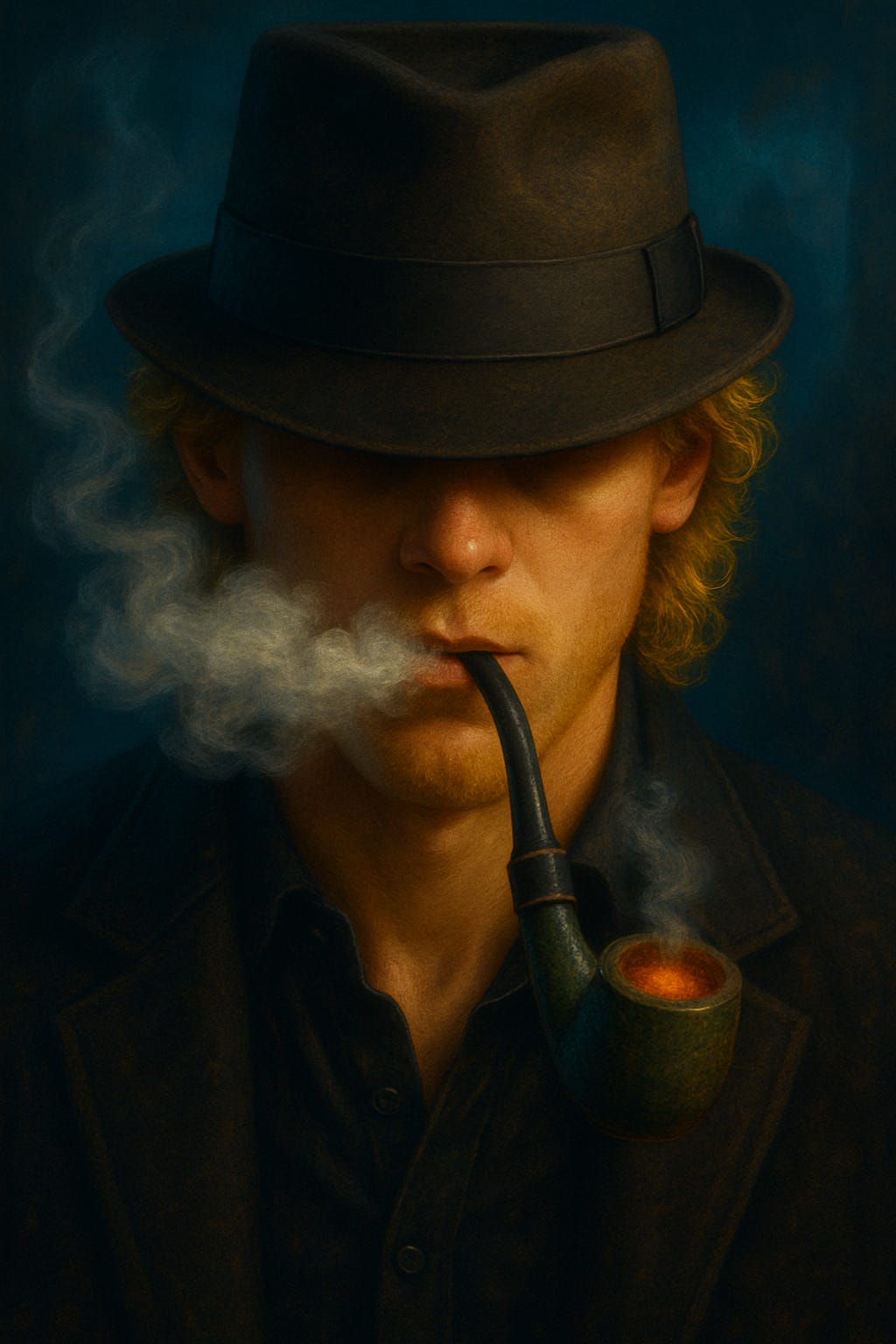
When it comes to the individual species, the best place to start is with the vampires, not because they are particularly common, but because everybody wants to be one. Nobody wants to be called a ghoul. It’s just not fashionable anymore. The term “vampire” has been diluted to the point of uselessness. There are creatures who feed off auras, sex, emotions, and all of them claim to be vampires, equivocating a dopamine hit for sustenance. There are creatures who acquire power through such means and experience withdrawal without those means. They also tend to zap their victim of energy, bringing on a lethargy that can sometimes lead to death. So, these creatures are, in a very real sense, parasitic, but that does not make them vampiric despite their declarations. Perhaps, in a future log, should I get around to it because I’ve wasted very little time humoring these creatures, I will categorize them as parasitic entities, like minor mortal demons of a sort, but for the purposes of this log, we shall focus on the vampires who actually drink blood, not eat meat nor absorb auras, but subsist off of the blood of the living and derive power from it. (Note: The long-thought-to-be-extinct Vrykolokas ate its victims entirely most of the time; however, they required blood to live, and there’s no question about that, to my knowledge, at any rate.) (Second Note: Throughout this log, I shall be referring to killing vampires in the traditional manner. What I mean by this is that one must cut off the head and/or destroy the heart. I am not referring to garlic, or crosses, or things of that nature because some of the species of the curse are more physical than others. If the curse has taken on a physical nature, the religious and herbal items will not work because you are essentially killing an animal. As a rule, I tend to default to the traditional manner, unless I know for certain that there is a spiritual component to the curse. This is the case with the later classifications. I shall identify them when they are brought up in this log.)
But even limiting the definition to such an extent, we are still left with a large variety, too many to actually name, but they do boil down to a list of basic classifications. Defining a vampire is a lot like defining a species of beetle. It all depends on how much weight you give a distinction. Are a red beetle and a blue beetle two different species, or does the one species come in two different colors?
My classifications go as follows. (Note: All of these classifications will develop courts and councils and knockoff covenants that rise and fall during a brief span of time. If one lasts a hundred years, they are an outlier. The Vorvolakos Covenant, simply known as The Covenant, is the exception to this. There are a few others, but I’ve yet to interact with them.)
1. The Flesh-Wearers – These creatures are humanoid bats that come in different shapes and sizes, but all of them have the uncanny ability to grow a suit of human skin. There is an important distinction to make here. Several species of vampire develop the ability to transform into a kind of hybrid given enough time, but this is a shapeshifting metamorphosis, not the creature’s true form. Their true form is human. It’s important to know the difference between the two because the rules for how to kill a flesh-wearer can vary, whereas a vampire who’s transformed can only be killed in the traditional manner. You can tell the difference via the nature of the transformation. A vampire who is transforming into a hybrid will simply and often slowly transform. The talons will grow, the snout will elongate, the teeth will sharpen, etc. However, a flesh-wearer will remove its human skin like a sort of membrane. Some require the traditional manner of eradication, but others will have a sort of pouch somewhere on their body, usually the abdomen, where they store human blood. If one punctures the pouch, the creature dies. So, in this respect they are easier to kill than most vampires, and they are not particularly bright. They can act human well enough, but very little effort is required to make them regress to their bestial state. They are quick-tempered and often highly irrational. They are an extremely localized phenomenon and move in packs. Should you encounter one, know that there are others nearby. They are prone to starting large courts or covens or whatever because they are essentially a hive mind. In the study of vampirism, we tend to think of it as a mutating virus. On one end of the spectrum, there is contagious; on the other, there is deadly. The flesh-wearer is somewhere in the middle. It retains enough humanity to mimic someone living in polite society, but its mind is wholly gone. Its mental state is as thin as the skin it wears around its true grotesque form. This creature is cunning enough to hide and prolong the contagion, but its pretense is thin and can shatter at any moment. Once that happens, the humans serving as its prey will either submit to its rule or destroy it entirely. In most cases, one cannot simply remove the curse by eradicating the vampire who bit the victim. The only way to prevent the transformation is to keep them from drinking enough blood to kill a human. Once that happens, the curse completes the transformation of the victim, and, to my knowledge, their minds are, in most cases, lost after that. As usual, there are exceptions: some of the curses are more spiritual rather than physical, and breaking the host vampire’s link will undo the curse, but this is less common in the flesh-wearer species. Most of the time, they cannot move in the day. They look like most humanoid bat figures, grey or black fur, long teeth, look bat-like, and so on. Their saliva usually makes the skin go numb instead of acting like a psychotropic. There are other species that have the numbing effect that are more sentient. This isn’t unheard of, but the numbing saliva is one of the chief characteristics of a flesh-wearer. When dealing with this species, your priority should be looking for the others. They’ll have formed a mob of one kind or another and will be attempting to exert tight control of a small region. In a word, they cluster.
2. Zombie vampires: (Note: There are two differences between a ghoul and a zombie vampire, and they are both quite simple. A zombie vampire has the trademark fangs, and a ghoul doesn’t. Number two: A ghoul will die without meat, and a zombie vampire wont.) In the aforementioned virus range, this species is on the far end of the deadly scale. The range works like this. If a creature turns fast and kills faster, it is on the deadly scale. While the flesh-wearer has a suit of skin to avoid detection, the zombie vampires don’t bother with such matters. They are half-rotted shells of their former human selves. Their curse removes the mind entirely in almost all cases. Some minds have been restored in the past, but less than a handful, again to my knowledge. They attack quickly and violently. Sometimes they are supernaturally strong, sometimes not. These creatures almost never last for very long, and they are often mistaken for ghouls. Practically speaking, they’re interchangeable with ghouls, the only difference really being that they suck the blood for food and eat the meat for pleasure. With the exception of the Vrykolakas (who I will discuss separately), they are by far the weakest of all the species. They are fast but dull and easy to spot. They are also almost always destroyed by sunlight. They’ll be in a group, but they don’t cluster like flesh-wearers because they usually aren’t around long enough to gather large numbers. The way these creatures form is something of a mystery. They die so quickly, it’s a wonder why they continue to pop up at all. There are a couple of theories. The first is that a zombie vampire is the result of two sentient vampires attempting to breed. I for one don’t believe this to be the case. I believe the second option is more likely. I think zombie vampires are the result of a human surviving an attack from either a flesh-wearer or a full-bat species. The victim turns, but sometimes a mutation occurs during the three-day interim, and instead of resembling his or her maker, the poor soul loses his or her mind—that or the soul is mercifully able to depart the body—and a half-rotted corpse emerges from the grave. Vampirism is an ever-shifting curse, so this seems the most likely scenario.
3. Full-Bat Species: I use this term somewhat loosely. Some of these species look more like bats than others. Some look more like trolls with sharp teeth, but the bottom line is that these creatures have taken on a vampiric form and cannot return to a human state. They come in two primary flavors, sentient and non-sentient, and these flavors are on both extremes of our virus scale. The non-sentient are on the far end of the deadly end, they kill fast and die faster. They are stupid, easy to spot, and easy to outwit. I suspect the emergence of these creatures is due to unexpected mutations in the vampire curse. The sentient variety, on the other hand, is the least deadly of all the species when all things are considered. They kill as little as possible, then return to their caves. Should you encounter one of these, expect to do a great deal of climbing. These creatures are usually found in mountainous regions and are very anti-social, that is to say, both deadly and shy. Both flavors must be killed in the traditional manner. There is one species that I know of with a blood pouch, but I wouldn’t count on this by any means. I’ve had one encounter with this species, and that man only fed on animals. He was a nuisance to the farmers in a certain mountainous region, so in the end, my mission became more of a negotiation rather than an extermination. I acted as an ambassador of sorts, and an agreement was reached. Such peaceful solutions almost never occur, but they are always a welcome reprieve from our bloody work.
4. Gremlin vampires: These things aren’t even human. I don’t know where they come from, but they’ve been known to appear every now and again. I only include them because they drink blood. But they are two-to-three-foot-tall humanoid bats. They fly around biting people. But these people don’t even turn. If anything happens at all, it’s just a nasty infection. They’re slimy, disgusting little rodents, and although they are easy to kill, I almost prefer dealing with the big ones. I find this type to be a headache more than anything. I usually don’t even send anybody for a case like this. I typically send a letter explaining how to trap the little buggers. Garlic is particularly effective at keeping them away, though. They are a nuisance more than anything.
5. Banshees: Two main species here, bat-like and human-like. These are the famous women that rip themselves in half and go screaming into the night. Some drink blood; others don’t. The humans are sentient; the bat-like variety is a coin toss. If they bite a woman, the woman becomes infected. If they bite a man, provided the man has a weak disposition, he will become their Familiar. Why they are always women, I don’t know—some localized curse, I presume. They can be killed in the traditional manner.
6. Dark Vampires: Technically a flesh-wearer can fall into this camp, as can a traditional vampire, but this is getting into the realm of the Variants, which I will discuss shortly. This is the first class of vampire that I can safely say will be affected by all means of defense against vampirism: garlic, crosses, everything. They often look like zombie vampires or even dried corpses, but this is because they’ve made tradeoffs to obtain power. Now this is where the subject gets tricky because anyone turned by this species will retain whatever look the vampire has taken on. So, if the vampire appears as a dried corpse, his turned victim will rot as normal until he or she becomes a dried corpse, then they roam the earth infecting people who turn and look as they do. But this species is always started by a vampire who’s made the tradeoff, that is, removed their supernatural beauty to obtain power. These are very dangerous, and it’s hard to tell the nature of your peril at first glance. If you’re dealing with a 3rd or 4th generation of this species, then you might only have to deal with a dried corpse, but if you’re dealing with the first, then expect all the things written about in the lore: manipulation of fog, shapeshifting, control and weaponization of the elements, fire lighting and such, supernatural speed, and so on. They can make other tradeoffs, but the removal of their permanent beauty is most common. The thing that really separates this class from the Variants is that they rely entirely on the occult rather than a combination of magic, occult means, and trading off some of their abilities for others.
7. Traditional Vampires: These are the creatures on which all the tales are based. The Vorvolakos are the eldest and most powerful of this variety, and I shall write about them separately as I have the most experience with them. They are considered the traditional vampires because they go through the eleven traditional phases of vampiric development, which have been compiled by the Order over the years. I will discuss the eleven stages when I write of the Vorvolakos since the phases were discovered through the study of that species. All the methods available work on them. Garlic, crosses, and so on. Their saliva mostly acts as a psychotropic, but there have been some cases where the saliva numbs the skin. A few cases exist where the saliva acts as an aphrodisiac, but this is rarer than the numbing effect. I want to point out something here. Vampires have been compared to sirens in the past because of their sexual proclivities. But while they use their supernatural beauty to seduce their prey, they are not sirens because sirens do not drink blood. They eat their prey, and there is a difference. Plus, not all vampires can sing, so there’s that. They can turn into bat-human hybrids given enough time, but as mentioned before, this is a shapeshifting technique, not their true form. These creatures can become every bit as powerful as the Dark Vampires in terms of magic, but it takes a great deal of time for them to develop such strength, and their magic is internal, not dependent on the demonic. This is a rule that must be understood when dealing with all supernatural creatures. Every type of monster are demon adjacent, that is to say, their unfortunate circumstances and transformations were kicked off by occult means, but not all monsters or magics are dependent on demons. There is residual energy that exists within the vampire, and it grows, but this takes time. The reason so many monsters turn to the demonic is because those evil beings speed up the process for reasons of their own. Demons are a means to fast power, so when dealing with a vampire who has recently turned but has accumulated power rapidly, assume that they’ve turned to the demonic for help. I write all this to say don’t assume that all vampires are utilizing demons if they resort to magical attacks but also don’t assume that magical attacks are a reflection of age. Magic is not a metric in the supernatural world. The only way to understand what you’re dealing with is to study the history of the vampire directly.
8. Variants: I will write about this class further at another time. But I want to mention them briefly here. A Variant is a vampire who has made certain trades to accumulate other powers. These powers can be accelerated versions of their own innate abilities, or they can be additional strengths given to them from the demonic realm. To put it simply, there are no rules when it comes to Variants. Even the means of killing them is often inconsistent. Some can even spend a limited amount of time in day, although this is very, very, limited. If you see a vampire roaming in the daylight, they have either drunk a potion, or they are a variant, and in both cases, they’ll be equivalent to humans in terms of strength during the daylight. All the vampiric defenses work on them. But you must be ready for anything. I will discuss them more later, for they deserve their own log.
These are the eight basic classes of vampires I’ve encountered. Again, I am intentionally limiting my definition to those who drink blood. To do this any other way would only invite chaos. In terms of frequency, you’ll most likely encounter a weaker version of the traditional vampire, not the Vorvolakos. Those are exceptionally rare. But you’re mostly likely to find a newborn recently out of the grave or a weaker form of the traditional vampiric curse, that is to say, a vampire that has some but not all of the Vorvolakos’ abilities. The curse has diluted over time. The second most, I would say, is the Dark Vampire. These creatures can be any sort of vampire who’s made a deal with a demon in exchange for power. The dried corpse variety is most common since that is the simplest trade with the most return, but any vampire in league with a demon apart from the hunger belongs in this category. The third would be the flesh-wearer. They are found in few locations, but when they do arise, there are lots of them. Usually what happens is that a colony of the beasts is wiped out, but one or two of them survive, and they begin to populate in another area. They grow fast, and the humans in the area are forced to make a decision: submit to a status of cattle or destroy them. Sometimes people submit, but they often don’t, and these things are remarkably stupid. They’re not strategists, normally. And the nature of their turning process presents a problem as well. Unlike the victims of the other vampiric species, who often put their attack out of their minds, the victim bitten by a flesh-wearer is keenly aware of their desire for blood. It hits them while they are alive, and if that human gets an inclination to give as good as he’s gotten, then that’s it for the beasts, because much like any predator, once they are truly challenged, they tend to break rank, beat a hasty retreat. They are a pathetic bunch. The trouble is there are so many of them. Should you find yourself facing this species, you should make it a point to destroy them all because if they ever do manage to cow an entire town, they can build a little mini empire that lasts a hundred years.
The number of encounters you’ll have with the final five will be few and far between. The zombie vampires I’d put next in the rank. The reason for this is obvious. They’re easy to spot, and they’re not bright. Plus, their groups tend to not grow larger than a pack of twenty. They almost never last long. The fifth would be the full-bat variant. They tend to dwell in the mountains and hit small towns if they go after people at all. The ones that do go after people too often are quickly killed because, again, they’re easy to spot. You’ll likely have to do as I did and work out a deal between the farmers and the vampire before you’ll have to resort to killing one of them. The trouble is that if you stumble onto one, you’re not going to have time to ask if the bat is sentient, and there lies the difficulty. The sixth would be the Banshee. They are a very localized species, probably the result of an adjacent curse almost wholly removed from vampirism. The only thing that makes them a vampire really is their reliance on blood. They need it to remain as they are. They won’t die without it, but like all vampires, they age and dwindle to a corpse-like state. Sometimes a vampire will resemble a ghoul in this emaciated condition, but this only applies to the oldest and most powerful among them. So, since they are in such localized regions, and there’s usually only a few of them, I’d be surprised if you encountered one at all. The seventh would be the Gremlin Vampires. They’re essentially a full-bat variant, but I classify them differently because there was never a time when they were men. The truth is I don’t know what they are. Some nasty thing from the fairy realm, I suspect. If you encounter it, you’d be among a very small number who ever have. I’ve had a number of dealings with them, but that is due to extenuating circumstances I won’t get into here. The last is the Variants. A detail that distinguishes them from the Dark Vampires is their strength. These are often very, very, powerful beings who’ve taken the tradeoff concept to an extreme. Dracula himself has been classified as a Variant. To give you an idea of the class difference between the Dark Vampires and the Variants, Dracula is one of a small number of beings who die and return on a regular basis. Dark Vampires cannot make such a claim. These are extreme heavy hitters, and I would appeal to the Order when dealing with them because destroying them is a massive endeavor not limited to a single team of hunters.
I must also take a moment to deal with misidentification. This is a common occurrence. The goal of this log is to minimize such occurrences, and hopefully it will do so. If you follow my parameters, it will save you trouble later on.
Remember that unless the creature has lost its sentience and is acting like a complete animal, you are ultimately dealing with a human. A vampire has wants and needs and plans just like anyone else. Also remember that part of our job is to save these creatures if we can. Some of them we’ve offered jobs with the Order despite their crimes. This is a controversial subject, but I will speak my peace on the matter because I have some personal experience in this regard. A vampire who’s done great harm can do more good. They can save lives. One has certainly saved mine. We kill them because most will continue to kill, but we are not in the business of distributing justice. That is for better men. We are in the business of preventing future evils. If that requires killing, we kill, but we don’t default to that if we don’t have to. We don’t bare our throats as an act of faith either. We need good reason to hope. But try to understand that even in killing we are offering these poor souls peace. Most are wholly unaware that vampirism is real, and they are blindsided by the parasitic demon called the hunger. One can fight the hunger if they are prepared, but most are not, and the mini-demon, or whatever you wish to call it, is strong enough to make a man willing to murder his father. To be taken in by the hunger almost entrapment. So, what determines whether or not we kill the beast isn’t whether or not they’ve killed. It’s whether or not they are willing to change, willing to suffer in order to change, willing to pay a lifelong penance for the lives they have taken. In my mind, there’s no better way to handle such matters. If the man or woman is willing to embrace hardship and right past wrongs, we spare them. If they’ve embraced the darkness, double down, in a manner in speaking, we kill them. However, you should understand a harsh truth. Most of them double down, and that has nothing to do with vampirism.
Read Pinkerton’s Bestiary Log 1
Read Pinkerton’s Bestiary Log 3
(The first three entries of Pinkerton’s Bestiary will be available to all readers. Beginning with later logs, this series will continue exclusively for paid subscribers, where it expands into deeper worldbuilding, monster descriptions, case histories, and ongoing narrative threads.)
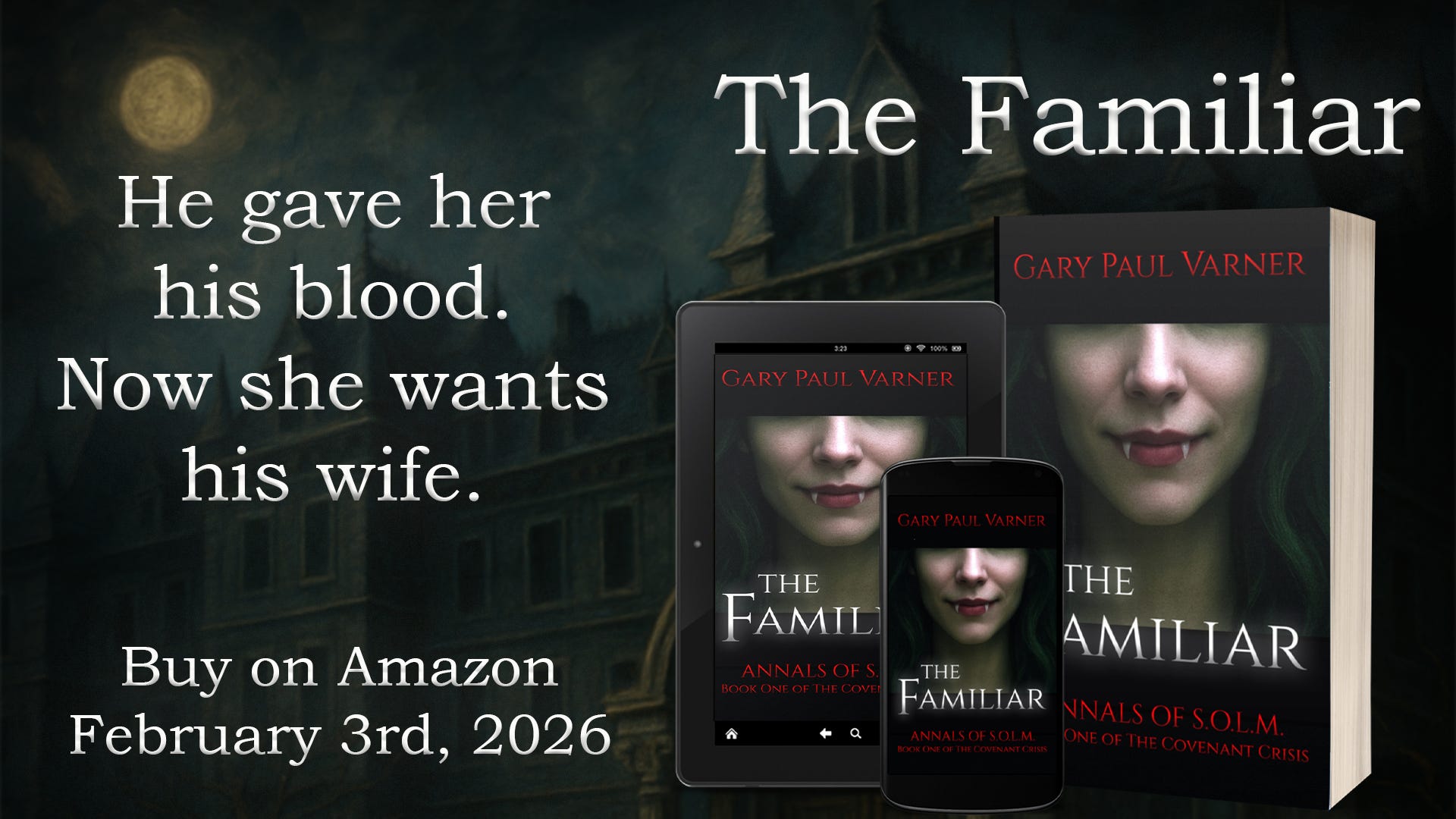
“If you’d like to read more of my work, The Familiar (a dark urban fantasy) comes out February 3rd, 2026. Gerome is a Familiar who gave his blood to a vampire. But now the vampire wants his wife. This book is the first of a larger series called Annals of S.O.L.M. If you’d like to support my work, The Familiar will be found on Amazon, Apple Books, Barnes & Noble, and more. I hope you enjoyed this entry of Pinkerton’s Bestiary.”
"Nobody wants to be called a ghoul. It’s just not fashionable anymore."
I know of one being who proudly self-identifies as such: https://davidperlmutter.substack.com/p/ghoulfriend